Ücretsiz fal hakkı
37435
Logo

Menü

Diller

Sınıflandırılmamış

Tarot Kartları Doğru Bilgi Veriyor mu? Size Neler Söyleyebilirler (ve Neler Söyleyemezler)?

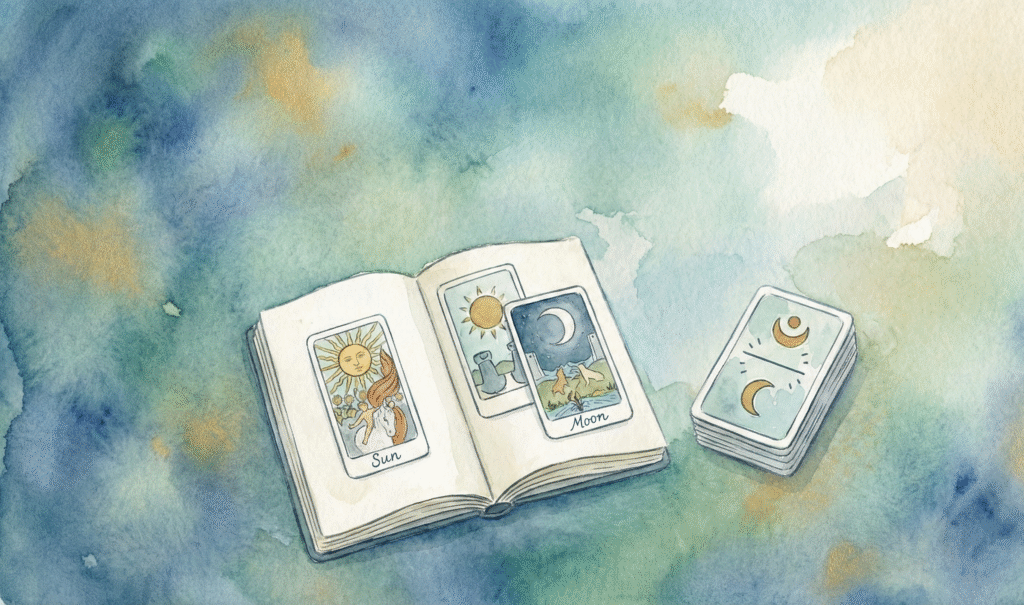
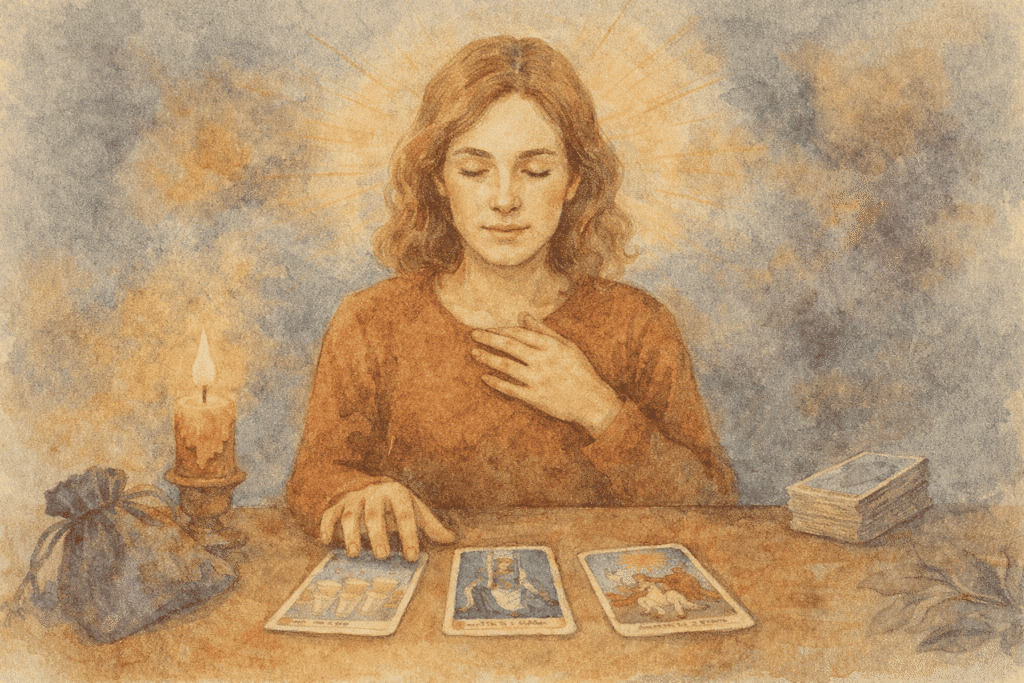
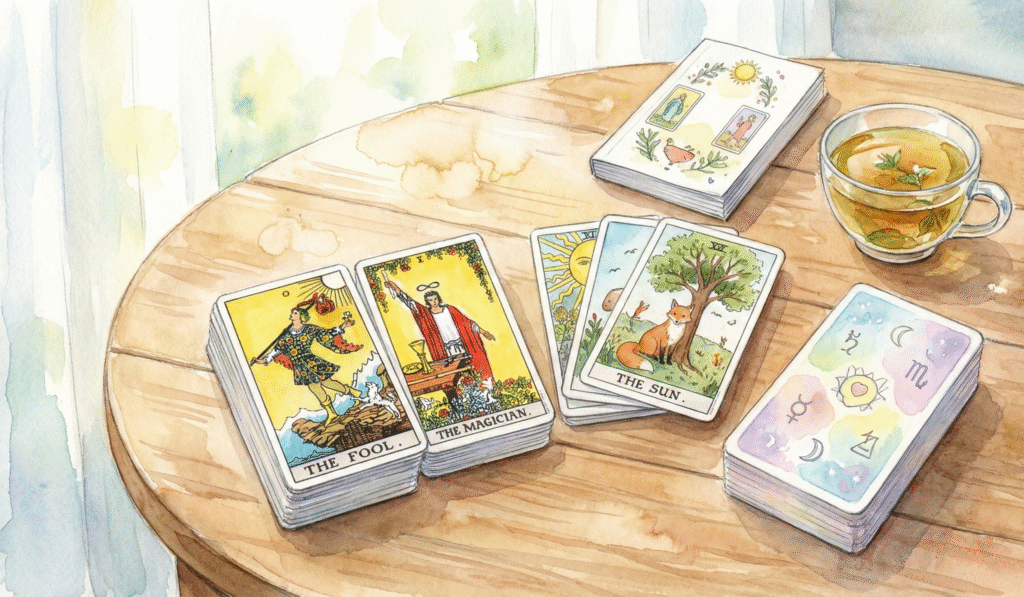
If you’ve ever had a tarot reading that felt uncannily accurate, you’ve probably asked yourself this question: are tarot cards actually accurate, or is it all coincidence?And just as often, skeptics will argue that tarot can’t possibly “know” anything real. The truth sits somewhere in between belief and dismissal. Tarot is neither a magical crystal ball nor a meaningless trick. Its accuracy depends on how it’s used, what it’s used for, and what you expect from it. Let’s break it down honestly, without mysticism hype or cynical dismissal. What People Mean When They Ask “Are Tarot Cards Accurate?” When most people ask about tarot accuracy, they usually mean one of three things: These are very different questions, and tarot answers them with very different levels of reliability. What Tarot Cards Can Be Accurate At 1. Reflecting Your Current Emotional and Mental State This is where tarot is often surprisingly accurate. Tarot works through symbolism, archetypes, and narrative. When you draw cards, your mind naturally connects their imagery and meanings to your current situation. This process brings subconscious thoughts, fears, hopes, and blind spots to the surface. In other words, tarot doesn’t invent truths, it reveals what you already know but haven’t fully acknowledged. That’s why people often say: Tarot excels at emotional clarity and self-awareness. 2. Helping You See Patterns and Options Tarot is accurate at showing patterns, not fixed outcomes. A good reading highlights: Instead of saying “this will happen,” tarot shows: That makes tarot a decision-support tool, not a fate machine. 3. Asking the Right Questions One of tarot’s most underrated strengths is how well it reframes questions. Instead of: Tarot gently redirects toward: The accuracy here lies in guidance, not prediction. What Tarot Cards Can’t Reliably Do 1. Predict Exact Events, Dates, or Outcomes Tarot is not accurate at: Life involves free will, other people’s choices, and changing circumstances. Tarot reads current energy, and energy shifts constantly. If someone claims tarot can tell you: That’s not tarot accuracy, that’s overconfidence. 2. Make Decisions For You Tarot cannot replace personal responsibility. It won’t: Tarot highlights consequences and inner truth, but you still choose. If tarot is used to avoid responsibility (“the cards told me to do it”), it loses its value. 3. Work Well When Asked from Obsession or Fear Tarot accuracy drops sharply when readings are driven by: In these states, people often interpret cards selectively, hearing only what they want or fear. The issue isn’t tarot, it’s emotional bias. Why Tarot Feels Accurate Even to Skeptics There are a few psychological reasons tarot can feel deeply accurate without being supernatural: But that doesn’t make tarot “fake.” Therapy, journaling, and coaching work in similar ways. Tarot simply uses cards instead of words. The accuracy comes from reflection, not fortune-telling. Is Tarot More Accurate Than Random Advice? Often, yes. Why? Because tarot: Random advice tells you what someone else thinks you should do. Tarot helps you hear your own inner voice, which is usually more accurate than external opinions. When Tarot Is Most Accurate Tarot works best when: The more self-aware and grounded you are, the more accurate tarot becomes. So… Are Tarot Cards Accurate? Yes, but not in the way movies and myths suggest. Tarot is accurate at: Tarot is not accurate at: Think of tarot as a compass, not a map. It won’t tell you exactly where you’ll end up, but it can show you where you’re headed and why. And sometimes, that kind of accuracy is exactly what we need.

Tarot Kartları Doğru Bilgi Veriyor mu? Size Neler Söyleyebilirler (ve Neler Söyleyemezler)? Yazıyı Oku "

Bugünkü Tarot Burç Yorumunuz: Kartları Kozmosla Birleştirin

You likely know your Sun sign, and you might even check your daily horoscope faithfully to see if the stars are aligning for romance or chaos. But while astrology is excellent at predicting the weather—the energetic climate of the day—it doesn’t always tell you how to dress for it. That is where Tarot comes in. Think of Astrology as the forecast (“Expect heavy emotional rain due to the Moon in Pisces”) and Tarot as your personal stylist (“Wear the yellow raincoat and bring an umbrella”). When you combine these two ancient systems, you stop passively receiving a horoscope and start actively co-creating your day. Here is how to blend the structure of the stars with the intuition of the cards to create a powerful daily “Tarot Horoscope.” The “Why”: Weather vs. Strategy The beauty of combining these systems lies in their synergy. Step 1: Know Your Elemental Matches To read Tarot with an astrological lens, you first need to understand the language of the elements. The four suits of the Tarot correspond directly to the four elements of the Zodiac. Tarot Suit Element Zodiac Signs The “Vibe” Wands Fire Aries, Leo, Sagittarius Action, passion, creativity, burnout, will. Cups Water Cancer, Scorpio, Pisces Emotions, relationships, intuition, dreams. Swords Air Gemini, Libra, Aquarius Logic, communication, conflict, truth. Pentacles Earth Taurus, Virgo, Capricorn Money, career, health, material stability. Pro Tip: If you are a Leo (Fire) and you pull the Ace of Cups (Water) for your daily card, the advice is to cool your fiery nature today and lead with empathy rather than action. Step 2: The Daily “Cosmic Check-In” Ritual You don’t need to be a professional astrologer to do this. You just need to know one thing: Where is the Moon today? (A quick Google search of “current moon sign” will tell you). The Moon changes signs every 2–3 days, dictating the collective emotional mood. The Ritual: Step 3: Navigating Major Transits When big astrological events hit, use Tarot to find your footing. A Simple Spread: The “As Above, So Below” Try this 3-card spread to anchor your day. Summary Your “Tarot Horoscope” isn’t about predicting the future; it is about aligning your free will with the cosmic currents. By checking the astrological weather and packing your Tarot “umbrella,” you ensure that no matter what the stars have in store, you are ready to handle it with grace.

Bugünkü Tarot Burç Yorumunuz: Kartları Kozmosla Birleştirin Yazıyı Oku "

Yeni Başlayanlar İçin En İyi Tarot Desteleri

Have you ever found yourself curious about the mystical world of tarot? Whether you’re seeking guidance, clarity, or simply a new hobby, delving into tarot can feel like both an exciting adventure and a daunting challenge. For beginners, the first step often involves choosing the right tarot deck that resonates with your personal journey. With the vast array of options available today, understanding which decks are best for beginners can make all the difference. This guide will illuminate some of the best tarot cards for beginners, focusing on what makes a deck truly beginner-friendly while also highlighting traditional and modern options. What Makes a Tarot Deck Beginner-Friendly? When starting your tarot journey, a few key features can help make the process more enjoyable and intuitive: Clear Symbolism: Decks that use straightforward imagery allow beginners to interpret cards without feeling overwhelmed by complex symbols. Rider-Waite-Based Art: Many beginner-friendly decks draw inspiration from the classic Rider-Waite-Smith tarot. This ensures consistency in the meanings and interpretations of the cards. Accessible Guidebook: A well-illustrated guidebook can provide invaluable insights, offer interpretations, and help beginners build confidence in their readings. Top Tarot Decks for Beginners 1. Rider-Waite Tarot Deck The gold standard of tarot, the Rider-Waite deck is perfect for beginners. Its imagery is rich with symbolism and widely recognized. The accompanying guidebook is thorough and user-friendly, making it an essential choice for any budding tarot reader. 2. The Wild Unknown Tarot This modern deck features beautiful artwork and a minimalist guidebook that emphasizes intuition. The Wild Unknown Tarot is a favorite among many, especially those drawn to nature and animal symbolism. 3. Everyday Tarot Mini Deck Compact and portable, the Everyday Tarot Mini Deck is a fantastic option for those on the go. Its straightforward images and practical guide make it easy to use in any situation. 4. Light Seer’s Tarot With its vibrant art and fresh approach, the Light Seer’s Tarot is perfect for the modern reader. The guidebook opens up dimensions of meaning that are relatable and applicable to daily life experiences. Where to Buy Authentic Tarot Decks Finding authentic tarot decks can be as rewarding as using them. Here are some practical tips: Bookstores: Many independent and chain bookstores offer a range of tarot decks. Online Retailers: Websites like Amazon or dedicated tarot shops are excellent places to find both beginner and advanced decks. Local Shops: Check out local metaphysical shops for unique selections and community insights. Choosing the Right Deck When selecting your deck, consider what resonates with your personal style. Look for artwork that captivates you, and try to envision your interpretations of the cards. Some might prefer whimsical illustrations, while others are drawn to intricate designs. No matter your choice, ensure it sparks a sense of curiosity within you. Additionally, don’t hesitate to explore resources like free online AI tarot to deepen your understanding of the cards and practice readings without pressure. This can be an excellent way to build your confidence and find your unique reading voice. Embrace Your Tarot Journey Starting your tarot journey can open new avenues of self-discovery and intuition. The right deck, along with practice and exploration, can help you tap into deeper insights about yourself and the world around you. As you learn and grow, remember that the connection you build with your deck is uniquely yours. Happy reading! Get a Free Reading References Smith, J. “Understanding Tarot: A Beginner’s Guide,” 2021 Psychology Today, “The Psychology of Tarot: Exploring Intuition,” 2020

Yeni Başlayanlar İçin En İyi Tarot Desteleri Yazıyı Oku "

Learn Tarot Fast: Simplified Meanings and Easy Pairing Techniques

Have you ever felt an inexplicable pull towards the mystical world of tarot, only to be overwhelmed by the intricate symbolism and deep meanings behind each card? If you’re a beginner, the journey to understanding tarot can sometimes seem daunting. But what if you could learn tarot fast, decoding its secrets in a more accessible and engaging way? Simplifying the meanings of tarot cards can empower you to make intuitive connections and build confidence as you delve into this ancient practice. Simplified Meanings: Your Key to Understanding Tarot When you strip down the complex symbolism of tarot cards to their essence, you can easily grasp their meanings. Here’s a quick guide featuring simplified tarot card meanings, structured with a few keywords to invoke clarity. The Fool: New beginnings, spontaneity, adventure The Magician: Manifestation, resourcefulness, power The High Priestess: Intuition, mystery, subconscious The Empress: Nurturing, abundance, fertility The Emperor: Authority, structure, control The Lovers: Relationships, choices, harmony The Tower: Sudden change, upheaval, revelation By focusing on these keywords, you can quickly internalize the tarot card meanings simplified, allowing you to form a solid foundation before exploring the deeper layers of interpretation. Quick Pairing Techniques for Readings Once you have a grasp of the basic meanings, pairing cards becomes an essential skill for meaningful tarot readings. Here are simple techniques to combine card interpretations for more nuanced insights: Complementary Pairing: Find cards that enhance each other’s meanings. For example, pairing The Fool (new beginnings) with The Empress (nurturing) suggests a creative venture is on the horizon. Contrasting Pairing: Use opposing cards to highlight tension or challenge. The Lovers (choices) with The Tower (upheaval) could indicate a critical relationship decision that leads to unexpected outcomes. Sequential Pairing: Cards can tell a story when read in sequence. The Magician (manifestation) followed by The Emperor (structure) can signify the need to create a plan after setting intentions. These techniques allow you to learn tarot fast by encouraging quick thinking and intuition during readings, without getting lost in complexities. Building Confidence Through Simplicity For many beginners, the biggest hurdle is the fear of misunderstanding or misinterpreting a card. Embracing simplicity helps you build confidence as you learn. Start with the basics and gradually challenge yourself to uncover deeper symbols and meanings later on. Remember, tarot is as much about intuition and personal insight as it is about the specific card meanings. If you’re eager to practice, consider exploring free online AI tarot readings to gain further experience and insight into the cards without the pressure of a traditional reading environment. Conclusion: Your Journey Awaits By simplifying tarot card meanings and learning quick pairing techniques, you set yourself up for success on your tarot journey. The confidence gained from these basics will empower you to delve deeper into the world of tarot, enriching your personal growth and understanding. Embrace the simplicity and let your intuition guide you! Get a Free Reading References Smith, J., The Art of Tarot Reading, 2021 Psychology Today, Tarot Card Meanings Simplified, 2022

Learn Tarot Fast: Simplified Meanings and Easy Pairing Techniques Yazıyı Oku "

How to Read Tarot Cards: A Beginner’s Guide to Building Intuition

Have you ever felt that life’s complexities could be unraveled with just a little guidance? Tarot cards are not merely a tool for predicting the future; they are a gateway to self-discovery and personal insight. As you embark on your journey to learn how to read tarot cards, you’ll find that the magic lies not just in the cards themselves, but in the intuition that guides you through their meanings. Choosing Your Tarot Deck The first step in your tarot journey is selecting a deck that resonates with you. With countless options available, it’s crucial to find one that feels personal and encourages your intuition to blossom. Consider what imagery inspires or comforts you. Popular choices for beginners include the Rider-Waite-Smith deck due to its rich symbolism and straightforward imagery, but don’t hesitate to explore other decks that speak to your soul! Preparation: Setting Intentions Once you’ve chosen your deck, it’s time to prepare it for reading. Before you shuffle the cards, take a moment to set your intentions. Ask yourself what you wish to explore or understand through your readings. This step encourages a personal connection to the cards and primes your intuition to guide you effectively. Shuffling the Deck Shuffling is not merely about randomizing the deck; it’s about energizing the cards and connecting them to your inquiry. As you shuffle, focus on your intentions, allowing thoughts and feelings to flow into the cards. You can shuffle in any way that feels comfortable—overhand, riffle, or even a simple cut. Listen to your intuition; it will guide you on how to best approach this task. Understanding Spreads Once your deck is prepared, the next step is to choose a spread. A spread is the layout of cards in a reading and can vary from simple one-card draws to more complex patterns like the Celtic Cross. For beginners, the three-card spread is a great place to start, representing the past, present, and future or various aspects of an inquiry. This approach provides a balanced view without overwhelming complexity. Reading the Cards: Trust Your Intuition As you pull your cards, take your time to observe their imagery and symbolism. While learning traditional meanings is helpful, honing your intuition is paramount in your readings. Observe your immediate reactions and thoughts upon seeing each card; these visceral responses can provide deeper insights than any textbook definition. Remember, tarot for beginners emphasizes interpreting the feelings and connections you have with the imagery over rote memorization. Journaling Practices Keep a tarot journal to document your readings, thoughts, and any insights that arise. This practice helps you reflect on your progress and deepens your connection to the cards. Over time, you may notice patterns in your readings, which can further enhance your understanding and intuition. Your journal can also serve as a safe space to explore your feelings without judgment, reinforcing your self-growth journey. Encouragement for New Readers As you dive into the world of tarot, remember to be gentle with yourself. The journey of learning how to read tarot cards is personal and unique to everyone. Trusting your instincts takes practice, but with time, you’ll grow more confident in your interpretations. There’s no right or wrong way to read the cards; allow your intuition to guide you and be patient as you unlock this ancient art. For those curious to explore tarot intuitively without any commitment, consider trying free online AI tarot readings, which can serve as practice and inspiration on your journey. Benefits of Learning Tarot Understanding tarot not only provides insights into your life but also fosters a stronger connection with your intuition. This self-awareness can empower you to make better decisions and embrace your personal truth. The more you engage with tarot, the more confident you will become in your ability to interpret the cards in relation to your life and experiences. Get a Free Reading References Smith, J. The Art of Tarot Reading. 2021. Psychology Today. Intuition and Decision Making. 2020.

How to Read Tarot Cards: A Beginner’s Guide to Building Intuition Yazıyı Oku "

78 Tarot Cards: Full List With Meanings (Free Downloadable PDF)

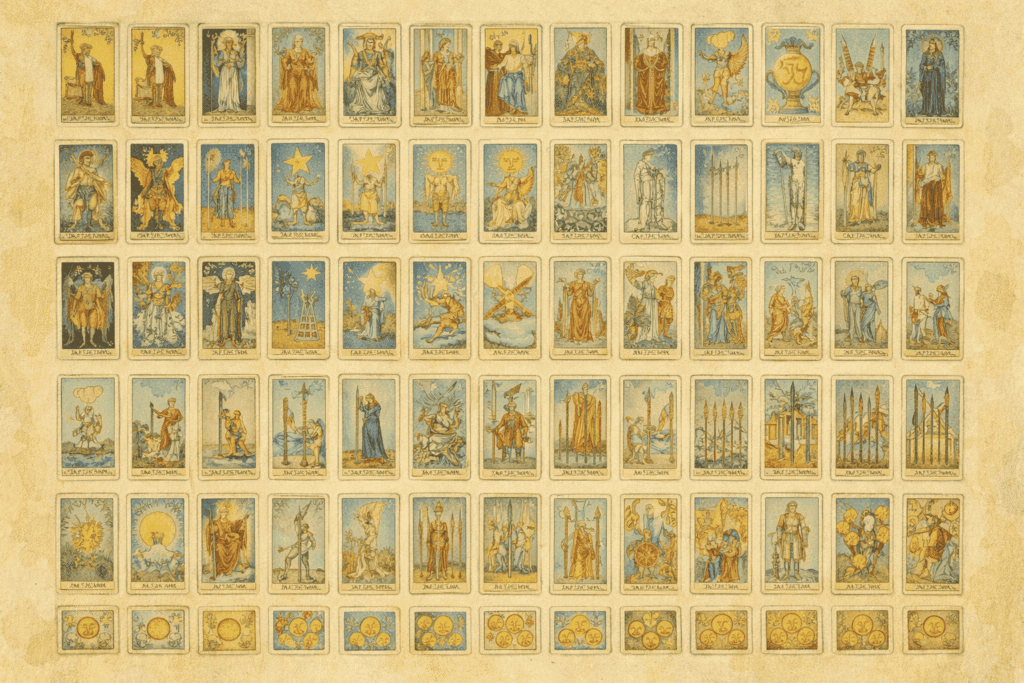
Have you ever found yourself captivated by the mysteries of tarot? Perhaps you’ve gazed at the stunning artwork on a deck, feeling pulled to uncover the insights hidden within the 78 cards. Tarot can be a powerful tool for self-discovery, guidance, and reflection. Understanding each card’s meaning not only enhances your readings but also deepens your connection to your intuition. In this article, we’ll explore all 78 tarot cards, providing a full list with simplified meanings to make your journey into tarot accessible and enjoyable. Understanding the 78 Tarot Cards The tarot deck is divided into two main categories: the Major Arcana and the Minor Arcana. Each category serves a unique purpose in your readings, representing different aspects of life and experiences. Major Arcana The Major Arcana consists of 22 cards that signify profound life events and spiritual lessons. Here’s the complete list of the Major Arcana cards along with their simplified meanings: The Fool: New beginnings; spontaneity; adventure. The Magician: Manifestation; resourcefulness; power. The High Priestess: Intuition; unconscious knowledge; mystery. The Empress: Abundance; nurturing; fertility. The Emperor: Authority; structure; control. The Hierophant: Tradition; spiritual guidance; conformity. The Lovers: Love; union; choices. The Chariot: Determination; willpower; success. Strength: Courage; inner strength; compassion. The Hermit: Soul-searching; introspection; solitude. Wheel of Fortune: Cycles; fate; karma. Justice: Fairness; truth; law. The Hanged Man: Sacrifice; release; new perspectives. Death: Endings; transformation; transition. Temperance: Balance; moderation; harmony. The Devil: Addiction; materialism; restriction. The Tower: Sudden change; chaos; revelation. The Star: Hope; inspiration; serenity. The Moon: Illusion; intuition; the subconscious. The Sun: Joy; success; positivity. Judgement: Reflection; reckoning; awakening. The World: Completion; fulfillment; achievement. Minor Arcana The Minor Arcana consists of 56 cards divided into four suits: Cups, Pentacles, Swords, and Wands. Each suit represents different areas of life. Here’s a breakdown of the Minor Arcana cards: Cups Ace of Cups: New relationships; emotional fulfillment. Two of Cups: Partnership; harmony; connection. Three of Cups: Friendship; celebration; community. Four of Cups: Apathy; contemplation; reevaluation. Five of Cups: Loss; grief; focusing on the negative. Six of Cups: Nostalgia; childhood memories; innocence. Seven of Cups: Choices; daydreaming; illusion. Eight of Cups: Abandonment; seeking deeper meaning. Nine of Cups: Contentment; satisfaction; emotional well-being. Ten of Cups: Happiness; family; emotional stability. Pentacles Ace of Pentacles: New financial opportunities; prosperity. Two of Pentacles: Balancing finances; adaptability. Three of Pentacles: Teamwork; collaboration; skill development. Four of Pentacles: Control; stability; resistance to change. Five of Pentacles: Hardship; financial loss; insecurity. Six of Pentacles: Generosity; charity; sharing wealth. Seven of Pentacles: Patience; long-term view; investment. Eight of Pentacles: Skill mastery; diligence; quality work. Nine of Pentacles: Independence; luxury; self-sufficiency. Ten of Pentacles: Legacy; financial security; family bonds. Swords Ace of Swords: Clarity; new ideas; breakthroughs. Two of Swords: Indecision; choices; blocked emotions. Three of Swords: Heartbreak; sorrow; betrayal. Four of Swords: Rest; recovery; contemplation. Five of Swords: Conflict; tension; betrayal. Six of Swords: Transition; moving on; recovery. Seven of Swords: Deception; strategy; stealth. Eight of Swords: Restriction; feeling trapped; self-imposed limitations. Nine of Swords: Anxiety; fear; nightmares. Ten of Swords: Endings; betrayal; loss. Wands Ace of Wands: Inspiration; new opportunities; growth. Two of Wands: Planning; future possibilities; decision-making. Three of Wands: Expansion; foresight; exploration. Four of Wands: Celebration; community; homecoming. Five of Wands: Competition; conflict; rivalry. Six of Wands: Success; recognition; achievement. Seven of Wands: Challenge; perseverance; standing your ground. Eight of Wands: Swift action; movement; progress. Nine of Wands: Resilience; stamina; persistence. Ten of Wands: Burden; responsibility; stress. Download Your Free Tarot Resource Now that you have a comprehensive understanding of the 78 tarot cards, you can enhance your tarot practice with a 78 tarot card list PDF that you can keep handy offline. This resource will help you as you learn or practice tarot readings, making it easier to remember the meanings of each card during your sessions. To access your free downloadable PDF, simply click below. This guide will be a perfect companion as you explore the world of tarot, whether you’re a beginner or just looking to brush up on your knowledge. Get a Free Reading Benefits of Learning Tarot Diving into tarot can offer numerous benefits for your personal journey. Tarot readings allow for self-reflection and a deeper understanding of your emotions, helping you to navigate life’s challenges with clarity and confidence. Additionally, as you become familiar with all tarot cards, you’ll find that your intuition strengthens, enabling you to trust your instincts when making decisions. Whether you’re seeking guidance in love, career, or personal growth, tarot offers a beautiful framework for exploration. And for those curious about how technology can enhance your experience, you might want to try free online AI tarot for instant mini-readings right at your fingertips. Conclusion We hope this comprehensive guide to the 78 tarot cards, complete with simplified meanings, serves as an invaluable tool on your tarot journey. Remember, tarot is not about predicting the future; it’s about understanding yourself and the choices that lie ahead. Embrace the art of tarot with openness, and let the cards guide you. References Smith, J. “Exploring the Power of Tarot” 2021 Psychology Today, “The Psychological Benefits of Tarot” 2020 Johnson, L. “Tarot as a Healing Tool” 2019

78 Tarot Cards: Full List With Meanings (Free Downloadable PDF) Yazıyı Oku "

Zodiac Signs and Tarot Cards: How Astrology Shapes Your Readings

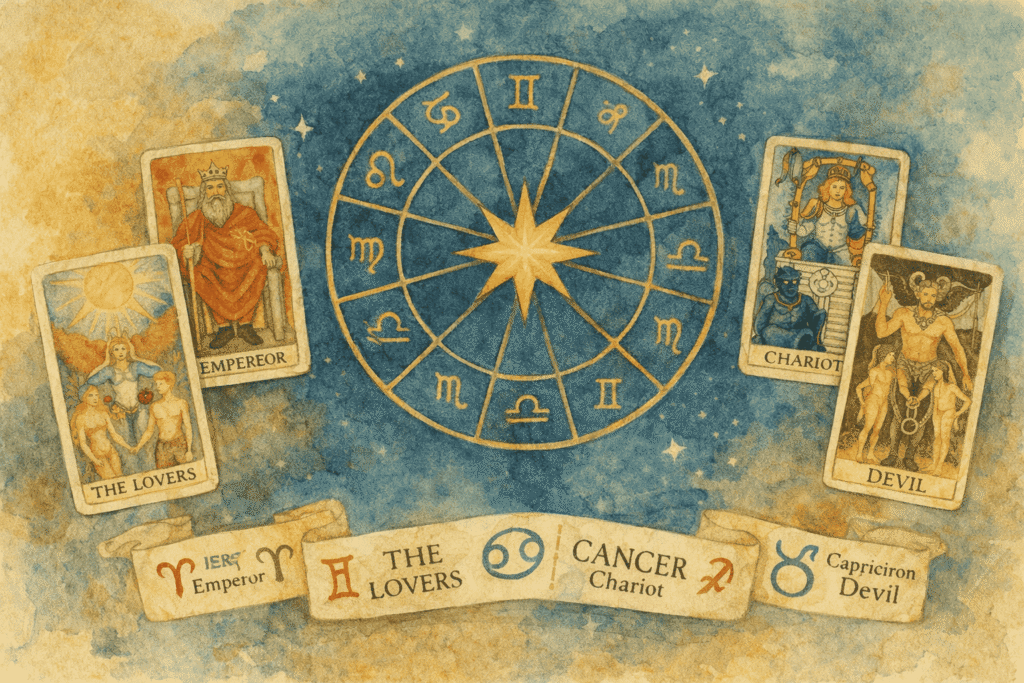
In today’s fast-paced world, where uncertainty often looms large, many people are seeking guidance and meaning in their lives. The intertwining realms of astrology and tarot can offer profound insights, helping individuals navigate their personal journeys. Understanding the connections between zodiac signs and tarot cards enriches our readings, allowing us to delve deeper into our emotional landscapes and gain clarity on our paths ahead. The Cosmic Connection: Tarot and Zodiac Signs Each zodiac sign resonates with certain qualities and energies, reflecting unique traits and developmental themes. Similarly, tarot offers a rich tapestry of imagery and symbolism, particularly within the Major Arcana. By exploring these tarot zodiac associations, we can uncover profound meanings during our readings, making them not just insightful but also deeply personal. Zodiac Signs and Their Tarot Card Associations Let’s take a look at how each zodiac sign corresponds to specific major arcana cards: Aries (The Emperor): Aries, the bold and dynamic initiator, is perfectly matched with The Emperor, embodying authority and structure. This connection can emphasize concepts of leadership and taking charge of one’s destiny during readings. Taurus (The Hierophant): Grounded and practical, Taurus aligns with The Hierophant, a card representing tradition and spirituality. This pairing encourages reflection on values and the wisdom of ancestral teachings. Gemini (The Lovers): Communication and duality are Gemini’s strengths, making The Lovers an apt representative. This connection prompts the exploration of relationships and choices in love and life. Cancer (The Chariot): Cancer’s nurturing energy intertwined with The Chariot signifies emotional resilience. This association invites us to navigate challenges by harnessing our inner strength. Leo (Strength): Leo embodies courage and confidence, resonating with the Strength card. This pairing inspires self-acceptance and the cultivation of inner power. Virgo (The Hermit): Virgo’s analytical nature connects with The Hermit, a card of introspection and search for truth. This reflects the importance of solitude and reflection in personal growth. Libra (Justice): Libra, the sign of balance, aligns with Justice, emphasizing fairness and ethical considerations in decision-making processes. Scorpio (Death): Scorpio’s transformative energy is starkly represented by the Death card. This association celebrates endings as vital beginnings, encouraging rebirth and emotional evolution. Sagittarius (Temperance): Sagittarius embodies adventure and balance, aligning beautifully with Temperance. This connection promotes harmony while exploring new horizons. Capricorn (The Devil): Capricorn’s ambition connects with The Devil, symbolizing materialism and shadow aspects. Recognizing these can facilitate growth and release from unhealthy patterns. Aquarius (The Star): As a visionary sign, Aquarius resonates with The Star, a card of hope and renewal. This partnership encourages us to dream big and nurture our ideals. Pisces (The Moon): The intuitive Pisces connects with The Moon, emphasizing the subconscious and the world of dreams. This pairing invites deeper emotional explorations, enhancing the mystical aspect of any reading. Deepening Interpretations through Synchronicity Combining tarot zodiac signs enhances our readings by adding layers of insight and personalization. For instance, if you draw The Emperor during a reading and you’re an Aries, you may realize that this card isn’t just about authority but about stepping into your true power and taking command of your life with confidence. As you weave together the symbolism of your zodiac sign with tarot interpretations, you’ll find new dimensions to your experiences, guiding you toward growth. By integrating astrology with tarot, readings become mirrors reflecting not only your situation but also your inherent qualities and potentials. This synchronicity enables you to embark on a more transformative journey as you navigate through life’s complexities. Start Your Journey Today Are you curious to see how these powerful associations can illuminate your path? Taking the plunge into the realm of astrology and tarot can be enlightening. If you’re looking for a unique twist on tarot readings, explore free online AI tarot, which offers a modern approach to these age-old practices. In the quest for self-discovery, embrace the cosmic connections that tarot and astrology provide. Each card you draw and each sign you resonate with can lead you toward deeper understanding and clarity in your personal journey. Get a Free Reading References Smith, John. “The Influence of Astrology on Tarot Readings.” 2021. Johnson, Emily. “Exploring the Major Arcana and Zodiac Connections.” Psychology Today, 2022.

Zodiac Signs and Tarot Cards: How Astrology Shapes Your Readings Yazıyı Oku "

Is Yes or No Tarot Accurate? What You Need to Know (And Which Spreads Work Best)

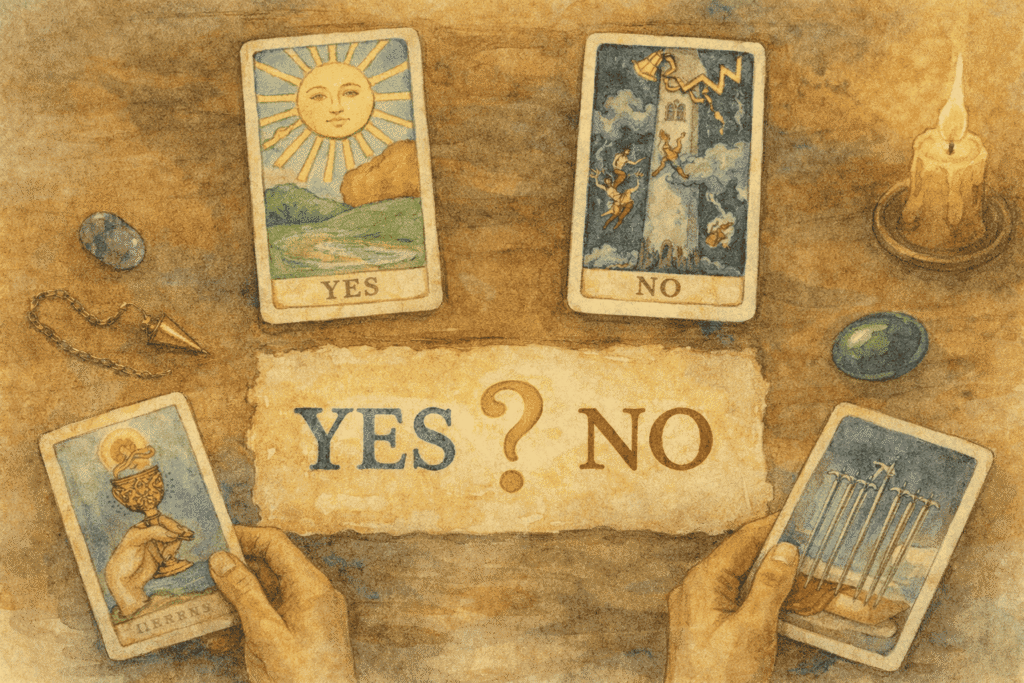
When faced with life’s uncertainties, the instinct to seek clear and definitive answers can be compelling. It’s perfectly normal to crave assurance during turbulent times, leading many to turn to methodologies like tarot for guidance. But is it truly effective to rely on yes or no Tarot for clarity? And can it be 100 percent accurate? In this article, we will explore these questions, delve into the potential limitations of binary queries, and uncover tarot spreads designed to enhance clarity and context. Understanding these elements can be a powerful tool in your personal journey toward self-discovery. Understanding the Limitations of Yes/No Questions While yes or no tarot readings can offer swift answers, they often limit the complexity of situations and emotions. Life rarely presents us with a binary choice; decisions usually lie on a spectrum of possibilities. By seeking clear-cut responses through tarot, you may inadvertently gloss over the deeper insights that the cards can provide. Moreover, an expectation for definitive answers can lead to disappointment or confusion if the reading doesn’t align with your desires. Many tarot practitioners emphasize that the cards work best when encouraging reflection rather than providing guarantees ([Psychology Today]). This invites individuals to explore their own feelings, thoughts, and motivations, rather than just waiting for an “okay” or “not okay.” Spreads Designed for Yes/No Readings If you’re interested in yes or no tarot, certain spreads can provide texture and context to your question, thereby increasing accuracy. Here are a few that work particularly well: 3-Card Spread: Typically, the first card represents the answer (yes, no, or maybe), while the second and third provide insight into why that answer is as it is. This spread brings balance to a binary choice. Decision-Making Spread: Use a spread with multiple positions addressing various aspects of the situation—pros and cons, immediate consequences, and long-term effects. This approach can help you better understand the layers of your question. Situation-Action-Outcome Spread: This spread helps clarify your present situation, the action you should take, and the potential outcome of that action. This offers a more comprehensive insight than a simple yes or no. When Yes/No Tarot is Useful Yes or no tarot can indeed be valuable in certain situations. Quick questions about straightforward issues—like “Should I take this job?” or “Is this the right time to move?”—may benefit from a succinct answer. Such questions usually involve a clear path and fewer emotional stakes, making them ideal for binary readings. Additionally, yes/no readings can serve as a prompt for deeper reflection. Even if the answer is “no,” it encourages you to ask, “Why not?” This quest for understanding aligns well with the core purpose of tarot—to foster inner growth and awareness. When Yes/No Tarot Falls Short However, yes or no tarot may not be ideal for more complex and emotionally charged situations. Questions related to relationships, health, or career decisions are often layered with nuances that cannot be captured with a simple yes or no. Asking “Will I get back together with my ex?” may result in an answer that falls short of the insight you really need. In such instances, taking a more expansive approach with additional card spreads can yield more meaningful guidance. Seeking certainty in an uncertain world is a natural inclination, but it’s essential to bear in mind that tarot’s true strength lies in its ability to guide reflection and foster personal growth rather than guarantee outcomes. Many people now explore free online AI tarot, which can provide a unique twist on traditional tarot practices, blending technology and intuition to spark deeper connections with oneself. Embrace the Journey Ultimately, the journey of tarot reading—whether through yes/no questions or expansive spreads—invites you to engage in a dialogue with your inner self. By exploring the complexities of your circumstances and using the cards as tools for introspection, you can discover paths that resonate with your personal truth. Get a Free Reading References Psychology Today, The Role of Reflection in Decision Making, 2021.

Is Yes or No Tarot Accurate? What You Need to Know (And Which Spreads Work Best) Yazıyı Oku "

Yes or No Tarot Card List: Which Cards Mean Yes, No, or Maybe?

Tarot speaks a language all its own, imbued with wisdom and insight. When faced with life’s overwhelming choices, the tarot can provide clarity, helping to illuminate the path before us. The allure of the yes or no tarot question is especially strong; after all, who hasn’t found themselves wondering, “Should I take that job? Should I reach out to a friend? Is this the right time for a new relationship?” In this guide, we explore the tarot yes or no list, diving into which cards lean towards affirmation, negation, or ambiguity, so you can navigate your queries with confidence. The Logic Behind Yes, No, and Maybe Understanding the associations of tarot cards in a yes or no context can be quite empowering. Each card carries its meanings, often shaped by its imagery, position in a spread, and surrounding cards. While there are traditional interpretations, it’s essential to recognize the nuances that arise based on your specific question and situation. Context plays a pivotal role—a card that might indicate “yes” in one scenario could suggest “maybe” or even “no” in another. Thus, your intuition is your best guide in the art of tarot interpretation. Yes tarot cards Some tarot cards are widely recognized as “yes” indicators. Here’s a concise list of cards that typically mean affirmative: The Sun – Represents joy, success, and positivity. The Star – Signifies hope, guidance, and renewed faith. The Chariot – Indicates triumph and forward momentum. The Ace of Cups – Reflects new beginnings in love and emotional fulfillment. No tarot cards On the other hand, there are cards that suggest a definitive “no.” Here’s a list to consider: The Tower – Denotes chaos, upheaval, and the need for change. The Devil – Suggests entrapment, addiction, or negative influences. The Five of Cups – Indicates grief and loss, highlighting what’s missing. The Ten of Swords – Represents betrayal, failure, and endings. Maybe tarot cards Lastly, some cards embody the uncertainty of “maybe,” their meanings heavily reliant on context: The Hanged Man – Implies suspension, waiting, or seeing things from a new perspective. The Moon – Represents illusions, intuition, and the unknown. The Two of Swords – Suggests indecision and choices that require careful consideration. The Page of Cups – Indicates subtlety, creativity, and emotional exploration. Using Your Intuition and Context While the tarot yes or no list serves as a great starting point, the most accurate yes or no tarot readings emerge when you incorporate your intuition and the specific circumstances surrounding your question. The cards encourage reflection and deeper understanding, offering not just answers, but pathways to clarity and decision-making. Furthermore, for those interested in a modern twist, consider leveraging technology like free online AI tarot. These tools can assist you in gaining perspectives from various interpretations, expanding your understanding of the cards. Benefits on Your Personal Journey Utilizing this tarot framework helps not only in addressing specific queries but also in promoting self-awareness and intuition development. With practice, you will unveil the complexities within each card and learn to trust your instincts when interpreting them for yes/no questions. Moreover, developing a rapport with the tarot can enrich your daily life, enhancing both your decision-making and mindfulness. It’s not just about seeking answers; it’s about fostering a deeper relationship with your inner self. Ready to Explore Tarot? As you embark on your tarot journey, remember that every reading is a chance for growth and reflection. Embrace the nuances and use them to guide your life choices. Get a Free Reading References Smith, J. Tarot and Intuition: Decoding the Cards, 2021 Psychology Today. The Power of Tarot in Self-Reflection, 2020 Johnson, L. The Art of Yes/No Tarot Readings, 2019

Yes or No Tarot Card List: Which Cards Mean Yes, No, or Maybe? Yazıyı Oku "

Tarot Year Ahead Spread: Plan the Next 12 Months With the Cards

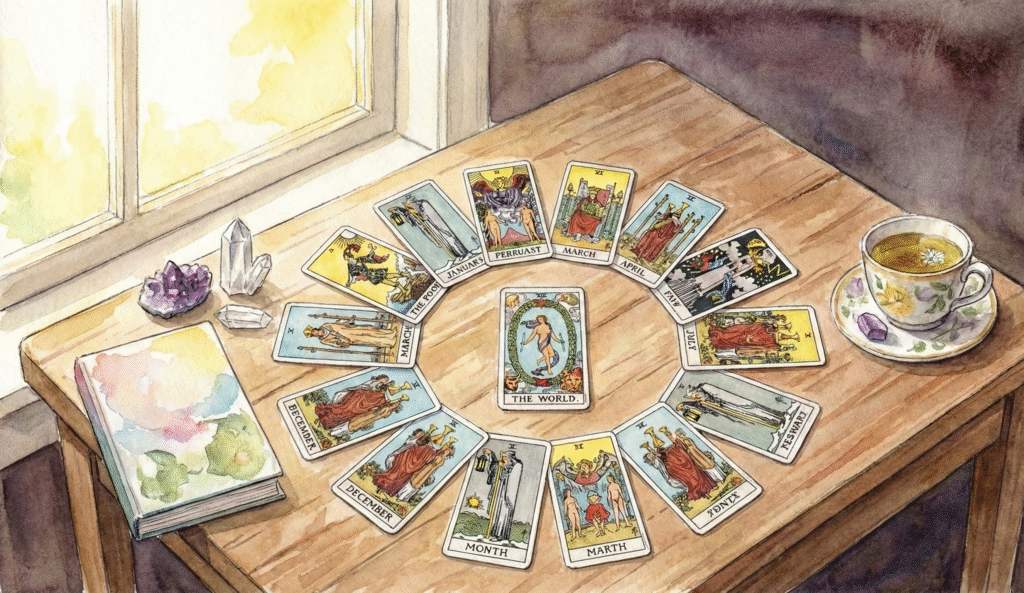
As the year unfolds, we often find ourselves contemplating our desires, goals, and aspirations. What if you could peer into the future, gaining insights and guidance for each month ahead? The Tarot Year Ahead Spread offers a unique opportunity to do just that, allowing you to harness the power of the cards to reflect, plan, and prepare for what lies ahead. In this guide, we will explore the intricacies of performing a tarot year spread, revealing how each of the twelve cards can serve as a beacon of light throughout your journey. Understanding the Tarot Year Ahead Spread The Tarot Year Ahead Spread involves pulling twelve cards—one for each month of the year. This spread is not merely a series of predictions; it invites you to engage with your inner self, providing a holistic view of your upcoming experiences. Each card represents a month where you can anticipate energies, challenges, and opportunities, enabling you to proactively navigate your path. Why Use a Year-Ahead Spread? The purpose of this spread transcends simple fortune-telling. By interpreting the cards holistically, you gain valuable insights that can assist you in: Planning: Identify key themes and potential changes in various aspects of your life, such as relationships, career, and personal growth. Reflection: Consider how past experiences shape your future, encouraging deeper understanding and personal development. Identifying Challenges: Recognize potential obstacles before they arise, preparing you to face them with confidence. Step-by-Step Guide to the Tarot Year Ahead Spread If you’re ready to dive into your journey of self-discovery, follow these steps to perform your Tarot Year Ahead Spread: 1. Prepare Your Space Find a quiet, comfortable place where you can focus. Gather your tarot deck, a journal, and a pen. Light a candle or incense if it helps you create a reflective atmosphere. 2. Ground and Center Yourself Take a few deep breaths, allowing any distractions to fade away. Set an intention for your reading—what do you hope to learn from this spread? 3. Shuffle and Draw Cards Shuffle the deck while concentrating on your intention. Once you feel ready, draw 12 cards from the deck, setting them in a line from left to right, representing January through December. 4. Interpret Each Card Begin interpreting each card, taking note of the themes, symbols, and messages. For a deeper understanding, consider referencing your tarot guidebook or using intuitive insights. A single card can convey a multitude of meanings, so trust your instincts while analyzing both individual and interrelated messages. 5. Journal Your Insights Record your reflections in your journal, noting down initial interpretations, thoughts on each month, and any patterns that emerge. This documentation will serve as a valuable resource throughout the year, allowing you to track progress and changes in your understanding. Additionally, consider utilizing free online AI tarot if you wish to explore further interpretations and guidance outside of your initial reading. 6. Regularly Review and Reflect As each month unfolds, revisit your journal entries and the cards drawn. Reflect on how the energies of each card manifest in your life and make notes on any surprises or challenges that arise. This ongoing process will deepen your understanding of your year-wise journey and help you stay aligned with your goals. The Benefits of a Year-Ahead Tarot Spread Engaging with the Tarot Year Ahead Spread allows you to connect profoundly with your inner self and the energies around you. By planning and reflecting on each month, you empower yourself to take charge of your journey with intention. This spread serves as a roadmap, guiding you through both highs and lows, cultivating resilience and foresight. In a world of uncertainty, having a tool to chronicle your emotional and spiritual development can be invaluable. The cards not only offer foresight but also encourage growth, prompting you to refine your goals and priorities as the year progresses. If you’re ready to embark on this enlightening adventure, we invite you to explore more insights through tarot. Let the cards guide you in your personal journey of self-discovery and empowerment. Get a Free Reading References Smith, J. (2021). The Art of Tarot: A Comprehensive Guide. New York: Tarot Publishing. Psychology Today. (2022). The Benefits of Reflective Journaling. Retrieved from Psychology Today.

Tarot Year Ahead Spread: Plan the Next 12 Months With the Cards Yazıyı Oku "

tr_TRTurkish

✦ Kartlar konuştu ✦

Sihrinizi üzerinizde taşıyın —
Bugün tasarruf edin

✦ Giyim ✦ Çantalar ✦ Kupalar ✦ Posterler ✦ Hediyeler

Ödeme sırasında bu kodu kullanın:

SUNRISE25

✦ AB ve ABD'ye ücretsiz kargo · Müşteri başına bir kullanım

Başa Dön