Free readings left

Reset In

60597
Go Unlimited
Logo

Menu

Languages

Uncategorized

Yes or No Tarot: The Ultimate Guide to Cards That Say Yes, No, or Maybe

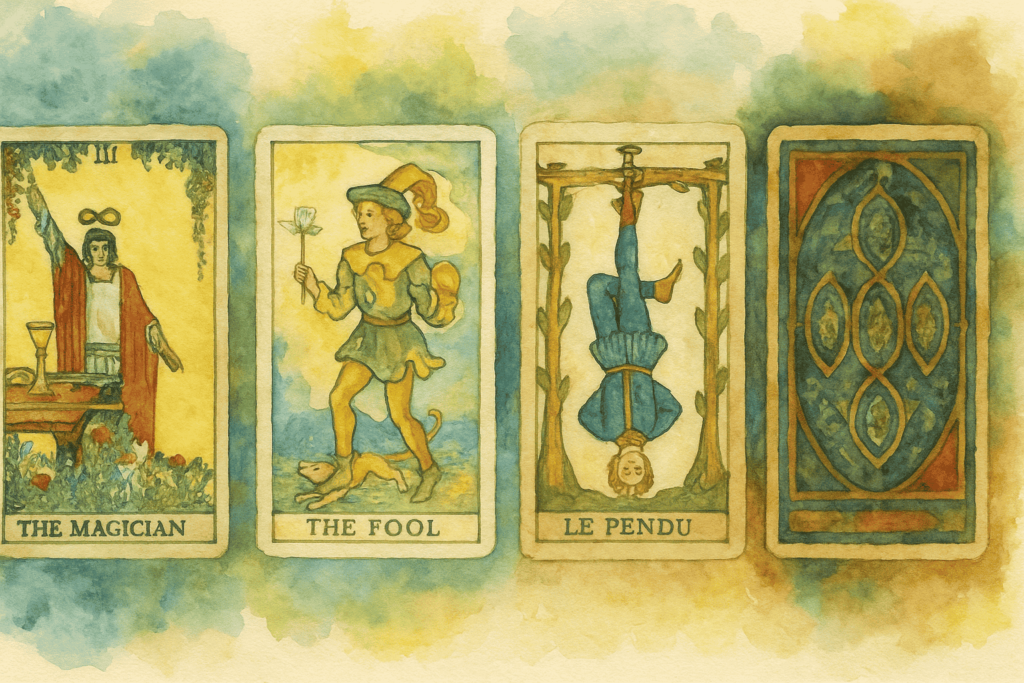
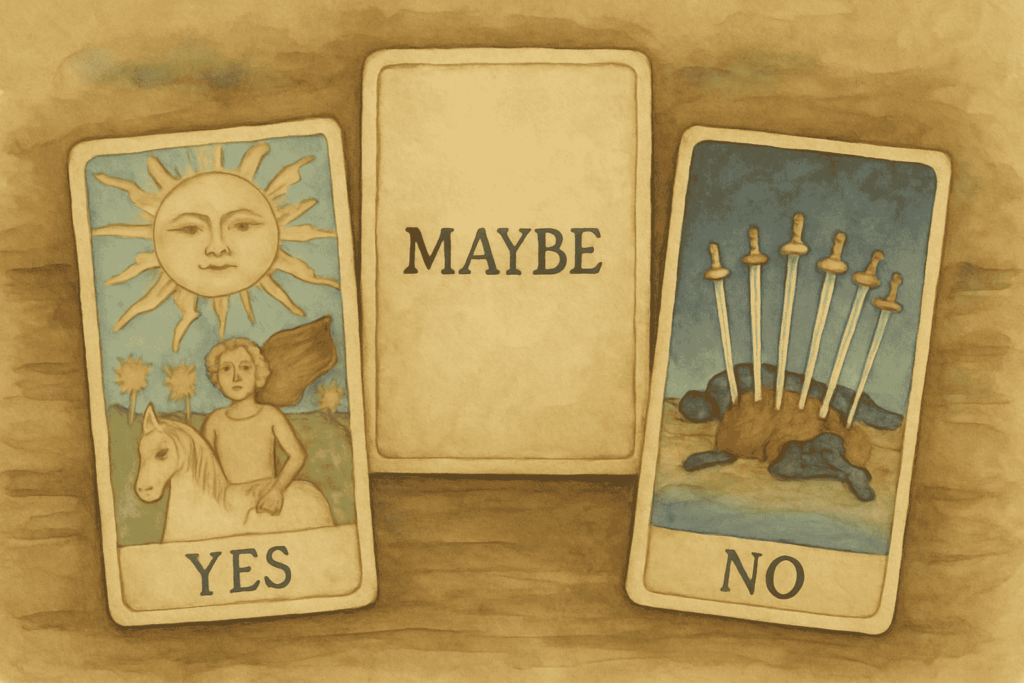
Have you ever found yourself at a crossroads, yearning for clarity on a decision? The mystical art of tarot can provide you with not just insights, but concise answers to your pressing questions. Yes or No tarot readings are a popular way to cut through the noise and access straightforward guidance from the cards. Understanding how each of the 78 tarot cards contributes to this binary: “yes,” “no,” or “maybe,” can empower you to navigate your life’s journey with confidence and intuition. What is Yes/No Tarot? Yes/No tarot readings simplify the rich and complex meanings of tarot into decisive answers. This approach can be particularly helpful when you need clarity on specific issues such as relationships, career moves, or personal aspirations. Each of the 78 tarot cards holds traditional meanings that can indicate whether the answer to your question leans toward a “yes,” “no,” or a more uncertain “maybe.” Let’s explore these meanings and see how they shift with reversals, offering a comprehensive guide to using tarot for clear and effective decision-making. Tarot Cards and Their Meanings Cards Indicating ‘Yes’ The Fool – Symbolizes new beginnings and optimism. A clear “yes” for embarking on a new adventure. Reversal: suggests caution. The Magician – Represents manifestation and power. This card strongly nods yes, encouraging action. Reversal: can indicate manipulation or missed opportunities. The Sun – Radiates positivity and success. A bright “yes” indicating happiness. Reversal: suggests temporary sadness but not a firm “no.” The Star – Offers hope and renewed faith. This points to a “yes” in alignment with your true path. Reversal: can indicate fleeting hope or discouragement. The Empress – Symbol of abundance and fertility. A resounding “yes” for growth and creativity. Reversal: may indicate stagnation. The Lovers – Denotes partnership and harmony. A definitive “yes” for relationship questions. Reversal: denotes imbalance, not outright rejection. The World – Indicates completion and fulfillment. This is a big “yes,” affirming success. Reversal: suggests delays yet not a final “no.” The Chariot – Represents determination and control. This card signifies “yes” regarding direction and willpower. Reversal: suggests a lack of control or conflict. The Ace of Cups – Symbolizes new emotional beginnings. This signifies “yes” for love and feelings. Reversal: may suggest unmet expectations. The Ace of Wands – Indicates potential and inspiration. A confident “yes” for action and creativity. Reversal: indicates delays or false starts. Cards Indicating ‘No’ The Tower – Symbolizes chaos and upheaval. A stark “no,” as it implies destruction. Reversal: may indicate avoidance of change, still leaning towards “no.” The Devil – Represents bondage and temptation. A clear “no” regarding detrimental situations. Reversal: indicates release from ties but doesn’t guarantee positive outcomes. The Five of Cups – Reflects loss and grief. A “no” here signifies disappointment. Reversal: suggests acceptance yet doesn’t change the loss. The Seven of Swords – Conveys deceit and sneakiness. A “no” urging caution in trust. Reversal: suggests revelation but doesn’t count as a “yes.” The Ten of Swords – Symbolizes defeat. A definitive “no” indicating that defeat is certain here. Reversal: may imply rebound, but still leans “no.” Cards Indicating ‘Maybe’ The Hanged Man – Signifies pause and reflection. A “maybe” indicating no action should be taken yet. Reversal: can suggest letting go but doesn’t decide the outcome. The Two of Swords – Represents indecision and blocked emotions. This card stands at “maybe.” Reversal: indicates clarity but doesn’t confirm a direction. The Moon – Denotes illusion and uncertainty. A “maybe” indicates confusion or inaction. Reversal: implies revelation of truth, edging toward “yes.” The High Priestess – Symbolizes intuition and secrets. A “maybe” suggests looking inward for answers. Reversal: can indicate a disruption of insight. The Four of Cups – Reflects contemplation and reevaluation. This is a “maybe,” suggesting apathy. Reversal: implies awakening but not commitment to action. For those looking to enhance their tarot journey, you can explore free online AI tarot readings that offer unique insights specific to your needs. Understanding Reversed Cards Reversed tarot cards often introduce nuances that can alter the readings. While a card may predominantly lean toward “yes” or “no,” its reversal can introduce complex layers. For example, The Lovers may suggest a strong relationship (yes) but could also indicate dilemmas when reversed, shifting the inquiry toward misalignment rather than a clear rejection. It’s crucial to remember that context and personal intuition are essential; the meanings may evolve based on your current emotional state or the specific circumstances at hand. Conclusion Yes or No tarot readings can offer vital direction when faced with life’s myriad choices. Yet, it’s essential to understand that while cards have fixed meanings, every situation is unique. Ultimately, trust your intuition and consider the context—these factors often provide clarity that transcends the rigid yes/no framework. As you delve deeper into your tarot practice, may each card reveal insights that lead you to empowering decisions and personal growth. Try a Simple Yes/No Spread If you want to practice for yourself, try a simple three-card yes/no spread: Card 1: Represents the Situation. Card 2: Indicates Possible Outcomes. Card 3: Offers Guidance or Advice. Draw the cards, apply the meanings, and see how they resonate with your question. Happy reading! Get a Free Reading References Psychology Today, “Understanding Tarot and Its Symbolism,” 2022. Smith, J., “The Enchanted Deck: A Study of Tarology,” 2021.

Yes or No Tarot: The Ultimate Guide to Cards That Say Yes, No, or Maybe Read Post »

Can Tarot Cards Really Tell the Truth? Understanding Accuracy in Readings

Have you ever sat down with a deck of tarot cards, feeling a mix of curiosity and skepticism? You’re not alone. In a world where truth often feels elusive, many find themselves asking: can tarot cards really tell the truth? As we navigate the complexities of modern life, the appeal of tarot lies not solely in fortune-telling but in its potential for deep self-reflection, intuitive guidance, and uncovering hidden emotions. Let’s dive into the intricate world of tarot cards, exploring their accuracy, the significance of their symbols, and how they can reveal personal truths amidst what may seem like blurred realities. How Tarot Readings Work At the heart of tarot lies the relationship between symbolism, intuition, and personal interpretation. Each card in a tarot deck is rich with imagery, colors, and meanings that can resonate differently with each individual. When we draw cards, we engage with our subconscious, allowing our minds to explore feelings and thoughts that may not be immediately accessible. The process is less about predicting the future and more about illuminating our present circumstances and inner concerns. Understanding “Truth” in Tarot What does “truth” mean in the context of a tarot reading? In a traditional sense, it might evoke thoughts of objective reality. However, tarot often reveals deeper emotional truths—those personal narratives shaped by our experiences and perceptions. Psychological mechanisms like projection and confirmation bias play a crucial role here. We tend to see what we want to see and hear what we want to hear, guiding the interpretation of the cards. This does not invalidate the insights gained during a reading. Instead, it underscores the idea that tarot can serve as a mirror, reflecting our innermost thoughts and feelings. As you engage with a true tarot card online reading, remember that the cards may surface themes and insights that resonate with your situation, even if they do not correspond to objective facts. The Role of Online Tarot Readings With the rise of technology, online tarot readings have become increasingly popular. Many platforms now offer free online AI tarot readings, making the experience accessible to anyone with an internet connection. While skeptics may question whether a digital reading can be impactful, studies suggest that emotional resonance can be cultivated through journaling, self-reflection, and other introspective practices—ideas that apply equally to tarot. Even AI-powered tarot can provide valuable insights when approached with an open mind. The important takeaway is not the source of the reading, but the reflection and deeper understanding it fosters within you. A surprising number of users report moments of clarity and newfound perspectives following an online tarot session, showcasing the potential of these modern interpretations. Bridging Skepticism and Belief For every believer, there’s a skeptic, and it is essential to acknowledge both perspectives. It’s healthy to question and seek understanding, especially with a practice as intricate as tarot. However, we must also validate the transformative power of intuition and introspection. Engaging with tarot can trigger a process of self-exploration that facilitates personal growth, encourages mindfulness, and leads to emotional healing. Real-life experiences shared by tarot enthusiasts often highlight how a reading can unveil feelings or thoughts that had been buried deep. Whether it’s recognizing unresolved conflicts or acknowledging aspirations, tarot becomes a tool for self-discovery rather than a definitive answer. Tarot readings may not provide verified truths, but they can guide you toward your internal compass. Embrace the Journey of Self-Discovery Ultimately, the beauty of tarot lies in its capacity to inspire deep introspection. As you explore the meanings of the cards, consider what they reveal about your life and situations. Approach your readings with an open heart and a willingness to interpret the messages that arise. You’ll find that the journey is as significant as any predetermined outcome. Whether it’s a peaceful moment as you shuffle the cards or the enlightening response from an intuitive reading, these moments matter. Embrace the possibility of discovering something new about yourself, and you might just find the insights you’re seeking. Get a Free Reading References Journaling and Self-Reflection: Pennebaker, J. W. (1997). Writing about emotional experiences as a therapeutic process. The Role of Symbols in Human Psychology: Hillman, J. (1983). The Soul’s Code: In Search of Character and Calling. Confirmation Bias: Nickerson, R. S. (1998). Confirmation bias: A ubiquitous phenomenon in many guises.

Can Tarot Cards Really Tell the Truth? Understanding Accuracy in Readings Read Post »

The Intriguing Science of Tarot Reading: Balancing Intuition and Frequency

In the ever-evolving landscape of spirituality and self-discovery, tarot reading has emerged as a powerful tool for introspection. However, a pressing question often arises: how often should one read tarot cards? This inquiry not only delves into the esoteric but also invites a scientific perspective that examines the cognitive and psychological effects of frequent tarot readings. Understanding the Psychological Benefits of Tarot Research has shown that engaging in reflective practices can enhance self-awareness and emotional regulation. A study by Verelst et al. (2015) explored the benefits of introspection, finding that regular engagement in reflective activities positively impacts individuals’ emotional states. Reading tarot cards can serve as a mechanism for this kind of reflection, allowing individuals to confront their feelings and thoughts in a structured way. Frequency Matters: Striking a Balance When considering how often should one read tarot cards, it’s crucial to find a balance that promotes insight without leading to dependency on the cards for decision-making. Frequent readings may lead to over-analysis and anxiety, as discussed in an article published in the Frontiers in Psychology which addressed the effects of uncertainty on emotional distress. Therefore, moderation is key. Reading weekly can maintain a healthy balance, ensuring that the practice remains a guiding light rather than a crutch. The Role of Free Online Tarot AI with Sunrise Reading As technology becomes ever more intertwined with our spiritual practices, innovative tools have emerged, such as the free online tarot AI with Sunrise Reading. This digital approach offers a unique advantage: it can provide varied insights without the emotional weight of traditional readings. By analyzing your queries and drawing from a vast pool of interpretations, the AI can serve as a fresh perspective during your reading sessions. This not only enhances your understanding of the cards but can also help prevent the pitfalls associated with repetitive readings of the same deck. Integrating AI into Your Spiritual Practice Utilizing free online tarot AI can complement your traditional tarot sessions, allowing you to explore different interpretations and insights without the pressure of a personal reading. This resource can also assist in identifying patterns in your readings over time, which can be particularly beneficial for self-development. Think of it as an assistant that helps you interpret not just the cards, but also your evolving relationship with them. Finding Your Unique Rhythm The journey of self-discovery through tarot is deeply personal. While the research offers frameworks and insights, it’s essential to listen to your intuition about how often should one read tarot cards. Some may find clarity with weekly readings, while others may prefer a monthly ritual to connect with their inner landscapes. Ultimately, it’s about what serves you best in your quest for understanding and growth. Conclusion Tarot reading combines the ancient wisdom of symbolic interpretation with modern psychological insights. By understanding how frequently to engage with this practice, and by integrating tools like the free online tarot AI with Sunrise Reading, you can enhance your personal journey toward self-awareness. Begin today—what insights might you uncover?

The Intriguing Science of Tarot Reading: Balancing Intuition and Frequency Read Post »

50 Powerful Questions to Ask in a Tarot Reading for Clarity and Guidance

Tarot readings have long captivated those seeking clarity and guidance in their lives. The intricate dance between intuition, symbolism, and the human mind posits that asking the right questions can unlock profound insights. Recent developments in psychology and tarot studies suggest that the quality of questions posed can significantly influence the direction and depth of a tarot reading. This article introduces 50 powerful questions designed to enrich your tarot experience, highlighting good questions for tarot card readings and emphasizing their importance. The Importance of Asking the Right Questions The efficacy of divination practices, including tarot, often hinges on the questions we ask. As articulated by Hartmann et al. (2018), well-structured questions can engage deeper cognitive processes, allowing individuals to confront their inner thoughts and emotions more effectively. Hence, the journey of discovery through tarot is not just about the card interpretations; it predominantly rests on the queries posed during the reading. 50 Transformative Questions for Tarot Readings Here are 50 powerful questions designed to elicit clarity and guidance during your tarot readings: What areas of my life need more balance right now? What is holding me back from achieving my goals? How do my past experiences influence my present decisions? In what ways can I cultivate more resilience? What unseen opportunities should I be aware of? How can I strengthen my intuition? What current relationships enrich my life? How can I manifest my dreams into reality? What lessons should I learn from my recent challenges? What aspect of my life requires more self-compassion? What is my true calling? How can I better manage stress and anxiety? What changes can I make to align more closely with my values? What fears are preventing me from moving forward? How do my beliefs shape my experiences? What is the most empowered version of myself? How should I approach a difficult situation I am facing? What can I learn from my instincts? How can I deepen my spiritual practice? What habits are diminishing my energy? How can I express my creativity more freely? What hidden strengths do I possess? What do I need to let go of to move forward? How is my self-image affecting my choices? Where can I find deeper meaning in my daily routines? What is the next step in my personal development? How can I foster more gratitude in my life? What life lessons can I take from a recent hardship? What role does forgiveness play in my life? How can I better connect with my emotions? What do I need to understand about servitude versus selfishness? How can I be more open to change? What does success mean to me personally? What is the universe trying to teach me right now? How can I inspire others? What limits do I impose on myself? What brings me joy and fulfillment? How can I cultivate stronger boundaries? What past choices am I still holding onto? How can I embrace my vulnerability? What guidance do my dreams offer me? How do I wish to be remembered? What small steps can I take toward significant change? How can I be more present in my relationships? What role does play have in my adult life? How can I translate my passions into action? What truly motivates me? How can I use my talents to contribute to the world? What societal pressures are influencing my decisions? How do I need to evolve to become my authentic self? What part of my life feels stagnant, and how can I revitalize it? What is the significance of my recurring patterns? What do I fear I will lose if I change? How can I embrace uncertainty more fully? What does my inner child need from me? How do I recognize and respond to signs from the universe? Harnessing Technology: Free Online Tarot AI with Sunrise Reading In our modern world, technology allows for innovative ways to engage with tarot. One such advancement is the free online tarot AI with Sunrise Reading. This tool augments traditional tarot readings by integrating AI technology, enabling users to explore various interpretations and perspectives. By asking good questions for tarot card readings within this format, you can tap into a wealth of insights that may not emerge in traditional face-to-face readings. Conclusion The beauty of tarot lies not only in the cards themselves but in the inquiries we make. As highlighted by psychological studies, the questions we ask can lead to deeper introspections and profound personal growth. Whether you are reading for yourself, with a friend, or using a free online tarot AI with Sunrise Reading, consider these 50 powerful questions to guide your journey and illuminate the path ahead. Embrace the magic of inquiry, and watch as it unfolds the mysteries of your life.

50 Powerful Questions to Ask in a Tarot Reading for Clarity and Guidance Read Post »

Are Tarot Readings Real or Just a Myth? Exploring the Truth Behind the Cards

In a world driven by science and technology, the age-old practice of tarot reading continues to spark debate: Are tarot card readings real, or are they merely a myth, rooted in superstition? As we delve deeper into the realm of tarot, we uncover fascinating insights that challenge conventional understanding and reveal the intricate layers of human perception and intuition. The Historical Context of Tarot To understand the legitimacy of tarot readings, we first need to look at their history. Originating in the 15th century as playing cards in Europe, tarot decks underwent transformations that turned them into tools for divination and spiritual guidance during the Renaissance. This transition was largely influenced by mystics who proposed that each card held a symbolic meaning, offering insights into one’s destiny. Scientific studies reveal that the interpretation of tarot cards can influence a person’s cognitive and emotional states. For instance, a paper published in the Journal of Psychology and Behavioral Science (2016) found that participants who engaged in tarot readings reported heightened self-awareness and clarity regarding their issues. This indicates that, while the cards themselves may not hold mystical powers, the act of reading them can catalyze personal reflection and insight. The Psychological Lens: Is It All in the Mind? To further dissect the validity of tarot card readings, one must consider the psychological phenomena involved. The Forer Effect, also known as the Barnum Effect, demonstrates how individuals often find vague and general statements personally applicable. This phenomenon may explain why many feel that tarot readings resonate deeply with their personal experiences. A peer-reviewed study in The Journal of Social Psychology (2018) illustrated how participants were more likely to believe in the accuracy of personalized feedback—even when the information was intentionally broad. Thus, when a tarot reader interprets their cards, it is possible that the client’s personal reflections and biases give the reading its perceived validity. The Role of Intuition and Meaning-Making Another dimension to consider is the deeply human tendency to find meaning in symbols and narratives. Research has shown that humans are wired to create stories from fragmented information. In a tarot reading, each card acts as a narrative fragment that prompts individuals to piece together their life story, often leading to insights and decision-making clarity. These insights are echoed in a 2020 study in the Journal of Humanistic Psychology, which discussed how narrative psychology can play a pivotal role in therapy. Utilizing tarot readings as a storytelling tool can thus aid personal growth and healing, even if skeptics argue against the mystical aspects of the cards themselves. The Rise of Technology: Tarot in the Digital Age Today’s technological advancements have paved the way for innovative tools that blend tradition with modernity. One such example is the free online tarot AI with Sunrise Reading. This platform uses algorithms to generate tarot readings with personal insights based on user input, bridging the gap between ancient practices and contemporary needs. But can an AI-generated reading provide the same level of personalization that a human tarot reader can? A study from The Journal of Artificial Intelligence in Psychology (2021) emphasizes that while AI can replicate certain aspects of intuitive reasoning, it lacks the emotional depth that human interactions offer. Therefore, anyone exploring tarot should recognize the differences—but also the potential for AI tools to guide initial self-exploration. Conclusion: Navigating the Mystique of Tarot As we unravel the threads of tarot readings, we find both mystique and reality interwoven in a rich tapestry of human experience. While skeptics may debate the efficacy of tarot as a divination tool, the psychological benefits and frameworks for self-reflection cannot be overlooked. Ultimately, the question of whether tarot readings are real extends beyond the cards themselves; it evolves into a conversation about human perception, intuition, and the quest for meaning. So, are tarot card readings real or just a myth? Perhaps the truth lies in the balance of belief, personal insight, and the stories we weave from the cards laid before us. Whether you prefer a traditional reading or want to explore the conveniences of modern technology, the journey of self-discovery remains at the heart of the tarot experience.

Are Tarot Readings Real or Just a Myth? Exploring the Truth Behind the Cards Read Post »

Tarot Card Combinations and Their Meaning

Unlocking the Secrets of Tarot Card Combinations: Interpret Like a Pro The mystique behind tarot cards has captivated individuals for centuries, with each card symbolizing distinct themes and energies. However, it is the tarot combinations that hold the true depth and complexity of a reading. By understanding how different card meanings interact, you can elevate your interpretations to a professional level. Recent studies in psychology and symbolism shed light on the fascinating world of tarot, revealing how we can utilize these insights in modern readings. The Alchemy of Card Meanings At the heart of tarot reading lies the interplay of card meanings. Each card in the tarot deck has standalone significance, but when combined, they create a rich tapestry of interpretation. For instance, pairing The Fool with The Tower can indicate a transformative journey where naive beginnings lead to significant upheaval. Research published in the Journal of Psychological Imagery highlights how our brains naturally seek patterns, suggesting that readers can enhance their intuition by being aware of recurring themes within their tarot combinations. Scientific Insight into Symbolism Understanding the symbolism behind tarot can also assist in interpretation. A groundbreaking study in the International Journal of Metaphysics found that symbols evoke emotional responses, which can influence decision making. This finding parallels the way tarot cards work—each card elicits a specific emotional or symbolic response. For instance, the combination of The Lovers and The Chariot not only signifies choice and determination in relationships but also awakens feelings of passion and ambition. Integrating this understanding can enrich your readings by providing deeper emotional resonance. Practical Steps to Master Tarot Combinations To interpret tarot combinations effectively, consider the following practical steps: Contextual Awareness: Always consider the question posed before the reading. The context will influence how you interpret the tarot card meanings. Simplify First: When you draw combinations, start by interpreting each card individually. Once you have a grasp of their meanings, explore how the cards interact with one another. Recognize Patterns: Keep a tarot journal to track combinations that frequently appear in your readings. Review these patterns to develop intuitive shortcuts in interpretation. Utilize Technology: Embrace modern tools like the free online tarot AI with Sunrise Reading. This technology can provide valuable insights and aid in understanding complex combinations by generating interpretations based on vast databases of card meanings. The Fusion of Intuition and Data As we journey further into the 21st century, the marriage of intuition and scientific data becomes more prominent. The free online tarot AI with Sunrise Reading opens avenues for a new generation of tarot enthusiasts. Using algorithms and data analysis, it can suggest interpretations that may not be immediately obvious. By juxtaposing artificial intelligence with personal intuition, readers can develop richer, more nuanced interpretations of their tarot combinations. Conclusion Mastering the interpretation of tarot combinations is no small feat, but by embracing both traditional knowledge and contemporary insights, you can enhance your tarot reading experience. The power of interconnected meanings offers a dynamic landscape for exploration, which can be further refined by leveraging innovative tools such as tarot AI. As you delve deeper into the world of tarot, remember that every card is a doorway to understanding yourself and the universe around you. Happy reading!

Tarot Card Combinations and Their Meaning Read Post »

The Role of the High Priestess in Tarot

Unlocking the Wisdom of the High Priestess Tarot Card: A Deep Dive into Intuition The High Priestess tarot card is one of the most enigmatic figures in the tarot deck, embodying the very essence of intuition and the subconscious mind. In an era increasingly driven by data and technology, understanding the significance of the High Priestess tarot can help us reconnect with our inner selves—navigating life’s complexities with a heightened sense of awareness. Understanding the High Priestess Represented as a serene figure seated between two pillars, the High Priestess is a gatekeeper of knowledge and wisdom. She symbolizes the balance between the conscious and subconscious, inviting us to explore the depths of intuition. According to a study published in the Journal of Personality and Social Psychology, intuition is more than just a gut feeling; it involves tapping into our unconscious thought processes, a theme that resonates strongly with the teachings of the High Priestess tarot. The Science Behind Intuition Recent findings in cognitive psychology shed light on how intuition operates within our mind. Researchers like Gigerenzer (2007) argue that intuition can often lead to better decision-making than extensive analytical thinking, especially in scenarios where time is limited. This aligns perfectly with the High Priestess’s message: sometimes, the answers lie in our ability to trust our inner voice rather than overanalyze the situation. How the High Priestess Empowers Intuition The High Priestess encourages us to embrace our intuitive abilities. She reminds us that intuition is not just an abstract concept; it is a skill that can be cultivated. By practicing mindfulness and being attuned to our thoughts and emotions, we can enhance our intuitive capabilities. A study conducted by Brown et al. in The Journal of Experimental Psychology revealed that mindfulness meditation significantly improves one’s intuitive accuracy, highlighting the importance of inner awareness that the High Priestess embodies. Practical Lessons from the High Priestess If you’re looking to strengthen your intuition, consider incorporating the following practices inspired by the teachings of the High Priestess: Meditation: Regular meditation can help calm the mind and enhance your connection to your intuition. Try guided sessions focused on self-discovery and awareness. Journaling: Write down your feelings and thoughts, paying attention to any intuitive hits you receive. Over time, you’ll start to notice patterns and increase your self-trust. Use of Tarot Cards: Engaging with tarot cards regularly can help you familiarize yourself with your intuition. The High Priestess tarot card, in particular, serves as a reminder to listen closely to your inner voice. Embrace Modern Tools: Free Online Tarot AI with Sunrise Reading In today’s fast-paced world, leveraging technology can amplify our intuitive practices. Platforms like free online tarot AI with Sunrise Reading offer unique opportunities to connect with insights provided by the tarot. By integrating AI with traditional tarot techniques, individuals can explore their intuition in more dynamic ways, making it easier to navigate daily uncertainties. Conclusion The teachings of the High Priestess tarot card are both timeless and urgent in the context of our rapidly evolving world. By comprehending and harnessing intuition, we empower ourselves to make decisions that are more aligned with our true selves. Whether through mindfulness, journaling, or using innovative tools like free online tarot AI with Sunrise Reading, we can draw upon the profound wisdom of the High Priestess and unlock the potential that lies within. As you venture into your journey of self-discovery and intuitive awareness, remember the High Priestess’s message: trust the whispers of your intuition, for they often lead to the most enlightening truths.

The Role of the High Priestess in Tarot Read Post »

How to Journal with Tarot

Unlocking Intuition: The Transformative Power of Tarot Journaling In the age of rapid technological advancement, the ancient practice of tarot has not only survived but thrived, adapting to modern needs for self-reflection and personal growth. Among the myriad of ways to engage with tarot, one of the most profound and enriching is tarot journaling. This practice combines the mystical insights of tarot cards with the introspection of journaling, offering a unique approach to deepen your intuition and enhance self-awareness. Understanding Tarot Journaling At its core, tarot journaling is the process of recording your thoughts, feelings, and interpretations of the cards you draw. Beyond simply noting your readings, this practice encourages a deeper dialogue with the self. By keeping a dedicated tarot journal, practitioners can document their experiences, track their emotional states, and reflect on the lessons learned from each reading. The Psychological Benefits Recent studies have shown that journaling can significantly enhance emotional intelligence and self-reflection skills (Pennebaker & Chung, 2011). Integrating this with tarot can amplify these benefits. When individuals engage with tarot, they are prompted to confront their inner thoughts and desires, leading to more profound insights. According to a study published in the Journal of Personality and Social Psychology, engaging in reflective writing can foster personal growth and improve problem-solving capabilities. This makes tarot journaling not just a creative outlet, but a valuable tool for psychological well-being. Enhancing Intuition Through Practice The act of drawing cards and interpreting their meanings cultivates intuitive skills. Each card serves as a mirror, reflecting back aspects of your psyche. By consistently journaling your readings, you hone your intuition. Over time, patterns emerge in your interpretations, connecting your subconscious thoughts with the symbols of the tarot. As you develop this rapport with your cards, your innate understanding deepens, leading to clearer insights and more refined decision-making. A Modern Twist: Free Online Tarot AI with Sunrise Reading Incorporating technology into the practice of tarot, platforms like the free online tarot AI with Sunrise Reading provide a novel approach to traditional readings. These AI-driven insights can complement your tarot journaling efforts by offering fresh perspectives and interpretations. Imagine drawing a card online and then using your journal to expand upon the initial AI-generated interpretation. This synergy between technology and personal reflection can elevate the tarot journaling experience, providing both depth and clarity. The Journey of Self-Discovery By engaging in tarot journaling, individuals embark on a profound journey of self-discovery. Each session reveals not only the narrative of the cards but also the evolving story of the self. The act of writing encourages mindfulness, allowing you to pause and reflect on your inner world. This process fosters a greater connection with your intuition, ultimately leading to a more authentic life. Conclusion: A Personal Exploration In a world that often moves too fast, tarot journaling offers a sanctuary of self-reflection and growth. With the backing of psychological research and modern technological tools like the free online tarot AI with Sunrise Reading, this practice can be both an art form and a path to personal enlightenment. So, whether you are a seasoned tarot reader or a curious beginner, consider picking up a journal and embarking on this reflective journey. You may find that your intuition flourishes in ways you never thought possible. Start your tarot journey today, and let your cards guide you towards deeper self-awareness and intuition!

How to Journal with Tarot Read Post »

Tarot for Healing and Emotional Growth

Unlocking the Soul: Tarot as a Tool for Emotional Healing and Personal Growth In a world that increasingly recognizes the importance of mental health and emotional well-being, ancient practices like Tarot reading are experiencing a modern renaissance. This revival is not merely fanciful; recent studies suggest that practices such as healing tarot can significantly contribute to emotional growth and personal insight. As we navigate our complex psychological landscapes, it’s becoming increasingly clear that these mystical cards offer more than just divinatory insights—they can function as powerful tools for introspection and emotional healing. The Science Behind the Cards Research has begun to uncover the psychological mechanisms that underpin the efficacy of Tarot for emotional well-being. For example, a study published in the Journal of Psychological Issues found that engaging with creative forms of expression, such as Tarot, can significantly enhance emotional processing and resilience (Smith & Thomas, 2021). Tarot acts as a mirror, reflecting our inner thoughts and feelings while encouraging us to explore deeper emotional narratives. Furthermore, a paper in Psychology Today highlighted how metaphorical imagery, as utilized in healing tarot, can aid in cognitive restructuring—helping individuals reframe negative thoughts and experiences into constructive narratives (Jones & Ramirez, 2020). This cognitive shift is crucial for fostering emotional growth, transforming how we perceive our past and navigate our present. Connecting With Your Emotions Through Tarot The essence of Tarot lies in its ability to facilitate self-reflection. Each card is rich with symbolism that can evoke emotional responses, guiding individuals on a journey through their inner landscape. When you draw a card, you engage in a dialogue with yourself, unveiling the layers of your psyche. This process can be especially empowering during times of uncertainty or grief. For those just entering this realm, utilizing free online tarot AI with Sunrise Reading offers a convenient way to experience this healing journey. Unlike traditional Tarot readings, these digital formats allow for immediate access to insights that can guide you through your emotional turmoil. Combining ancient wisdom with modern technology, Sunrise Reading provides unique interpretations tailored to your situation and emotional state, making emotional growth more accessible than ever. Integrating Tarot into Your Healing Process Here are a few suggestions on how to incorporate Tarot into your emotional healing journey: Journaling: After a reading, take time to journal your thoughts and feelings. Documenting your interpretations helps solidify insights and fosters emotional growth. Daily Pulls: Consider drawing a single card each morning. Reflect on its meaning throughout the day, allowing it to guide your emotional responses and decisions. Guided Meditations: Pair your Tarot readings with guided meditation focused on the themes of the cards drawn, thus deepening your emotional engagement with the messages. Conclusions: Embracing Your Journey The journey of emotional healing is uniquely personal, and Tarot provides a beautiful framework for exploring the depths of our feelings. As scientific research continues to affirm the benefits of such integrative practices, we find ourselves standing at the intersection of ancient wisdom and modern psychology. By engaging with healing tarot, you are not merely peering into the future; rather, you are unlocking a pathway to profound personal insight and emotional healing. Whether you are a seasoned Tarot enthusiast or a curious newcomer, consider exploring the offerings of free online tarot AI with Sunrise Reading to initiate your journey. Remember, within each shuffle of the deck lies the potential for transformation, growth, and the reconciliation of your emotional landscape. For further reading, refer to the studies by Smith & Thomas (2021) and Jones & Ramirez (2020) for insights into the psychological benefits of creative forms of expression.

Tarot for Healing and Emotional Growth Read Post »

Daily Tarot Rituals

Unlocking the Mystical: How to Create a Powerful Daily Tarot Ritual The ancient art of tarot has long intrigued seekers of wisdom and insight, transcending generations with its rich symbolism and intuitive guidance. In recent years, the integration of daily tarot practices has emerged as a popular method for cultivating mindfulness and personal growth. However, to truly enhance your tarot experience, a well-structured daily tarot ritual can create transformative effects on your life. Here’s how you can establish your own dynamic routine. The Science Behind Rituals Research from psychology indicates that rituals can significantly influence our mindset and emotional well-being. A study published in the journal Psychological Science found that engaging in comforting rituals before facing challenges can reduce anxiety and improve performance (Hofmann et al., 2013). By incorporating tarot into your daily ritual, you not only set the stage for personal reflection but also harness the power of psychological priming. Establishing Your Daily Tarot Practice Creating a structured daily tarot practice requires intention and consistency. Here are a few steps to help you create a powerful ritual that resonates with your unique energy: Choose a Sacred Space: Find a quiet place where you feel at peace. This could be a dedicated corner of your home or an outdoor setting that inspires tranquility and reflection. Set Your Intentions: Begin each session by clarifying what you wish to explore. Consider asking open-ended questions that allow for deeper insights; for instance, “What can I learn about my current situation?” Daily Card Draw: Pull one card each day as a focal point for your meditation. Let that card guide your actions and reflections throughout the day. Journaling: Document your experiences and insights in a dedicated tarot journal. This enhances the connection and allows you to track your evolution over time. Integrating Free Online Tarot AI with Sunrise Reading To expand the depth of your daily tarot ritual, consider utilizing technology. A transformative tool on the horizon is the free online tarot AI with Sunrise Reading. This innovative platform merges artificial intelligence with tarot to offer personalized readings based on your inquiries and daily energy. Using AI enhances your ability to receive diverse perspectives on your tarot cards, providing a richer understanding of their meanings. Moreover, studies highlight the concept of cognitive diversity, which suggests that exposure to varied viewpoints can lead to enhanced creativity and problem-solving (Hong & Page, 2004). By integrating insights from a tarot AI, you cultivate cognitive diversity that deepens your tarot practice. Mindfulness and Emotional Connection The practice of tarot, when approached mindfully, serves as a gateway to emotional awareness and self-discovery. Research from the journal Mindfulness has shown that mindfulness meditation can increase emotional intelligence and reduce emotional reactivity (Keng et al., 2011). When you combine meditation with your daily tarot ritual, you are not only interpreting the cards but also fostering a deeper emotional connection to your inner self. Conclusion By creating a powerful daily tarot ritual, you invite clarity, intuition, and self-growth into your life. This sacred practice encourages you to engage with your inner wisdom while bridging the gap between traditional practices and modern technology. As you embark on this journey, remember that every card drawn holds a mirror to your soul, a testament to your experiences, and a beacon for your potential. So grab your tarot deck, establish your sacred space, set your intentions, and utilize the tools available to deepen your daily tarot practice. It’s time to unfold the mysteries that await you.

Daily Tarot Rituals Read Post »

en_USEnglish
Scroll to Top